

Choose drainage first
Curry leaf plants (Murraya koenigii) prefer well-draining soils that are rich in organic matter.
Growing a plant already? Diagnose the issue first, then compare fertilizer for routine care when it is actively growing. Ask us a growing question if you are unsure.
The best soil for curry leaf plants is
2. Espoma Organic Potting Soil for Herbs
These are existing soil options to compare. Check the current product ingredients and whether fertilizer is already included. Curry leaf plants need an acidic to neutral mix that holds some moisture but drains freely; the right balance depends on your pot, climate and watering habits.
A suitable container mix should drain freely while retaining enough moisture for the roots. It's important to note that curry leaf plants are sensitive to overwatering, so it's essential to ensure that the soil has proper drainage. Additionally, adding a layer of mulch over the soil can help to retain moisture while preventing the growth of weeds.
Check how the mix behaves in your pot
- Use a pot with drainage holes and empty excess water from the saucer.
- Water when the upper layer begins to dry, rather than following a fixed calendar.
- If the mix stays soggy for days, reassess drainage and watering before adding fertilizer.
- Choose a container mix rather than dense garden soil for a small pot.
Curry leaf plants come from tropical and subtropical regions. Treat them as plants needing moisture with good drainage, rather than assuming they should stay dry because of their origin.
Kumar's Garden · Grow with confidence
Match good soil with thoughtful feeding
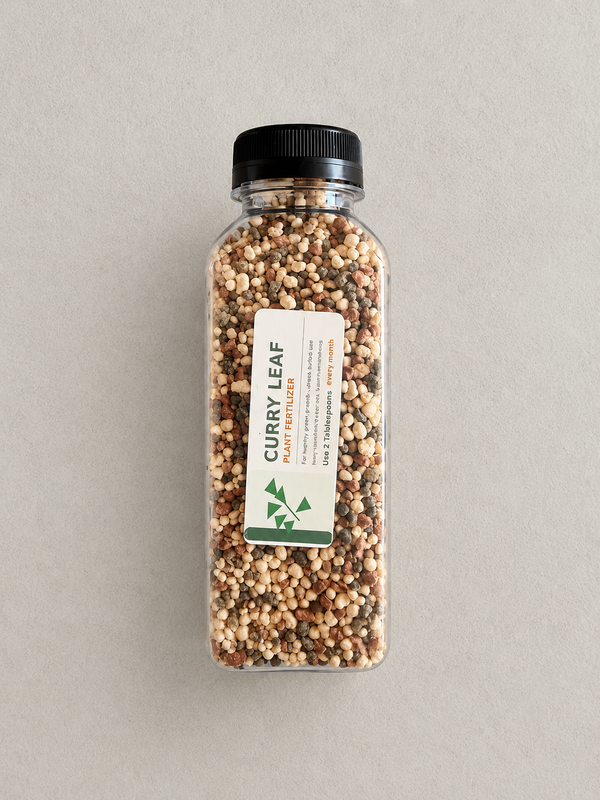
Check whether your potting mix already contains fertilizer. When your plant is actively growing and needs feeding, compare our curry leaf fertilizer and follow its directions. Soil and fertilizer work together; neither replaces good drainage.
Explore curry leaf fertilizerSee starter plants
Free shipping. Plant orders include care instructions. Questions? Ask our family before you order.
Care references: RHS curry tree profile and University of Maryland Extension: watering indoor plants.