

To care for a curry leaf plant indoors in winter, prioritize bright light, protection from cold, and watering that follows soil moisture rather than a summer schedule. If growth slows, more fertilizer is usually not the answer.
I'm Kumar from Kumar's Garden in Arizona. This guide is for the move from outdoor growing to indoor winter care: what to check first, what to change, and what to leave alone.
Choose the winter location before cold weather arrives
Curry leaf plants, also called Bergera koenigii or Murraya koenigii, need protection from frost. The Royal Horticultural Society's curry tree profile recommends overwintering indoors in frost-prone climates.
Find your brightest suitable window. Check the actual space at night: a sunny windowsill can still become cold near drafty glass. Keep foliage from touching cold panes and keep the pot away from blasts of heating air. If daylight is inadequate, consider a grow light and follow its placement instructions.
Change the watering decision, not just the calendar
Instead of deciding that every Sunday is watering day, make Sunday a checking day. Feel the upper potting mix, lift the pot to compare its weight, and inspect the drainage saucer. These observations are more useful than copying someone else's number of days between waterings.
University of Maryland Extension advice for curry leaf plants suggests allowing the top inch or two to become fairly dry between waterings and emptying water from the saucer. Pot size and conditions affect how quickly that happens. Do not leave the entire root ball bone dry for a prolonged period, or keep it continuously saturated.
Should you fertilize a curry leaf plant in winter?
Look for active growth first. A plant producing little or no new growth generally needs little or no fertilizer. Nebraska Extension explains that a brightly lit plant may continue growing in winter, so conditions matter more than the month.
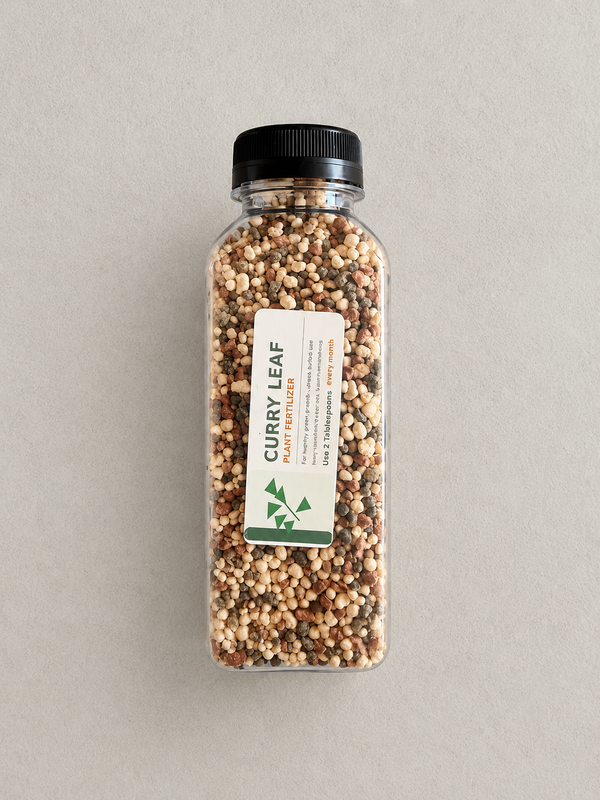
When your plant is established and actively growing, you can review Kumar's Garden curry leaf plant fertilizer and follow its label for the pot and plant you have. Do not add extra fertilizer to compensate for low light, cold stress, or wet roots.
A simple weekly winter checklist
- Light: Has the plant been moved behind a curtain or shaded by another pot?
- Moisture: Is the mix drying between waterings, or staying wet for days?
- Leaves: Check both sides for pests and note whether leaf loss is increasing.
- Temperature: Feel for drafts near the pot, especially overnight.
- Changes: Write down watering dates and take a photo from the same angle.
A short record makes it easier to judge whether an adjustment helps. Avoid changing the pot, fertilizer, watering and light all at once unless there is an urgent problem.
Winter care questions
Does leaf drop mean my plant is dead?
Not necessarily, but don't assume every leaf drop is harmless dormancy. Reduced winter light can stress indoor plants. Check moisture and pests before deciding what to do; Kansas State Extension describes common winter stress patterns.
Should I repot it to make it grow?
Repotting is not the first response to slow winter growth. First check its location, moisture and drainage. If you suspect damaged roots or another urgent issue, get advice specific to the plant rather than following a routine repotting date.
Can I start with a small plant?
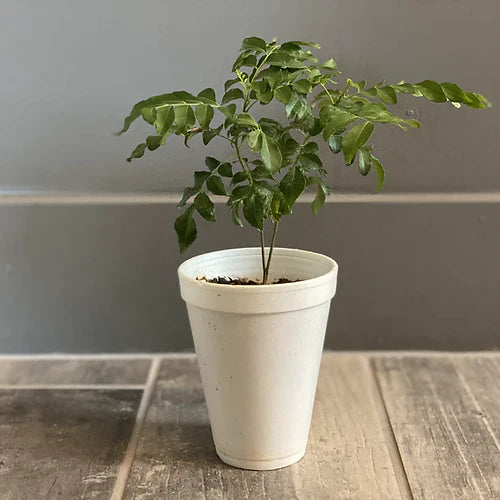
Yes, but plan its indoor space before ordering and give it time to settle in. Our 6-inch curry leaf plant with a larger fertilizer sampler is a starter plant, not a mature tree ready for heavy harvesting. Ask our family about your growing setup if you need help choosing.